

Why I Paint Close-Up: The Intimacy of Seeing
There is something that happens when we bring a subject closer.
Perhaps that sounds strange coming from someone who paints animals, but when I look at Yuki or Muta, I don't see simply a beautiful cat that might make an interesting painting. I see a personality I know. I recognise their expressions, their moods, the way they look at me, and those fleeting moments when they are completely still.
It is those moments that make me want to paint.
When I look at a photograph I have taken of them, I often find myself looking far beyond the obvious. I start noticing the tiny things, the particular colour in the shadows of the fur, the way the light catches an eye, a slight change in expression, or the softness around the face. And quite often I find myself wanting to come closer. Not because I want to show more detail for the sake of detail, but because the closer I look, the more I feel there is to see. That is really where my Close-Up Figures series began. I wanted to explore what happens when I remove almost everything else and bring the subject right up to the viewer. When the background falls away and there is nowhere for the eye to wander, we are left with a face, a gaze and a sense of presence.
For me, that creates a different kind of relationship between the painting and the person looking at it. It becomes intimate.
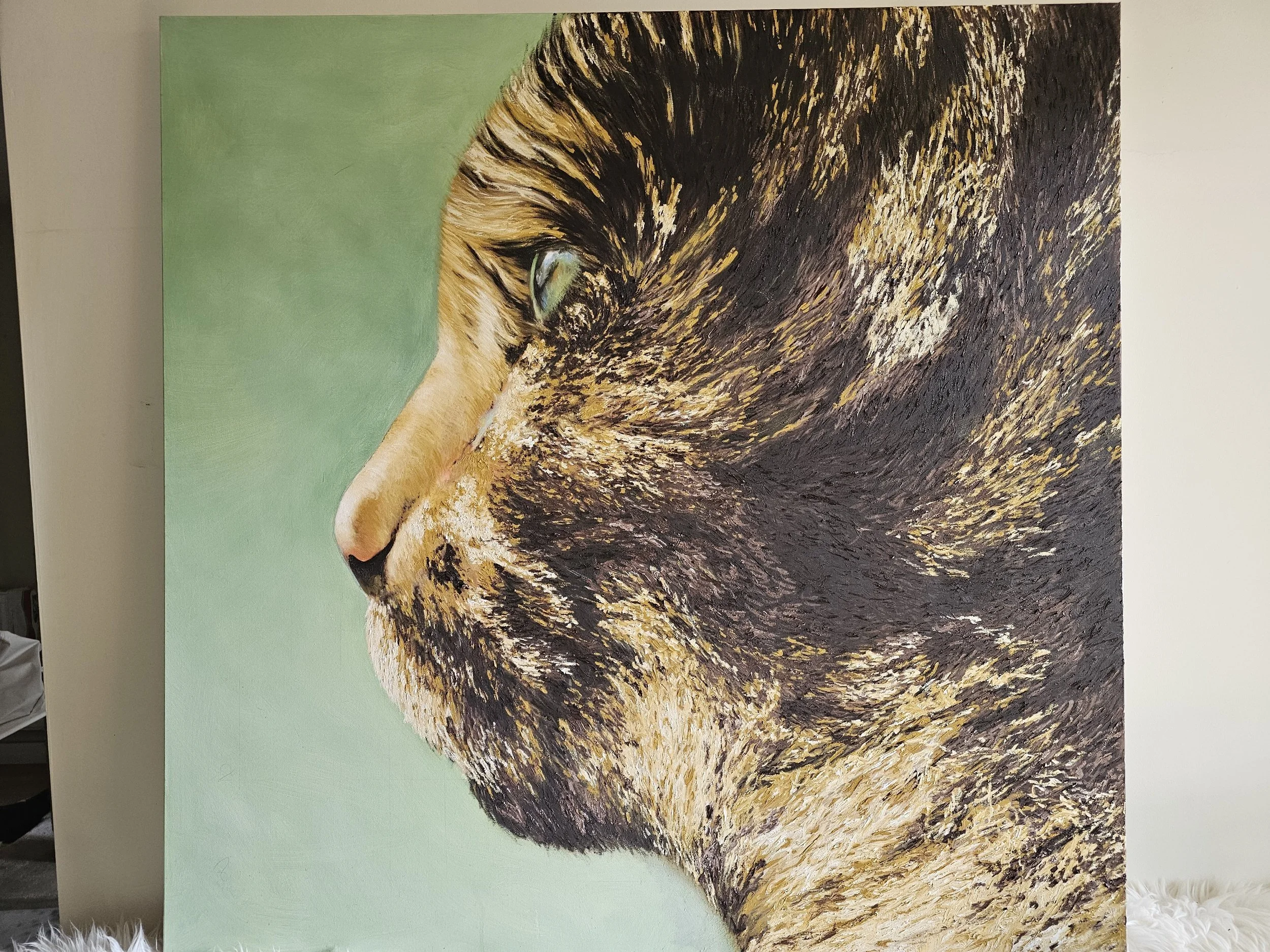
Coming closer
I think about this every time I begin one of these paintings. When we see an animal from across a room, we see the whole picture, the body, the surroundings, the movement, the context.
But when we come closer, something changes. The surroundings begin to disappear. The face becomes the landscape. The eyes become the focal point. And suddenly the smallest details matter. This is what I want to explore through my close-up paintings: the quiet intimacy of really looking at something, or someone, we care about.
There is less distance. Less distraction. More presence.
Why the eyes matter
For me, the eyes are often where a painting begins to come alive. They are not simply another feature to reproduce. They hold attention. hey create a relationship between the subject and the person looking. This is particularly true when painting animals.
We may not be able to explain exactly what an animal is thinking, but we recognise something in the gaze. Curiosity. Trust. Alertness. Calm. Sometimes simply presence. When I paint Yuki, I am not only thinking about the shape and colour of her eyes. I am thinking about her. That distinction matters. The technical challenge is important, but the emotional connection comes first.
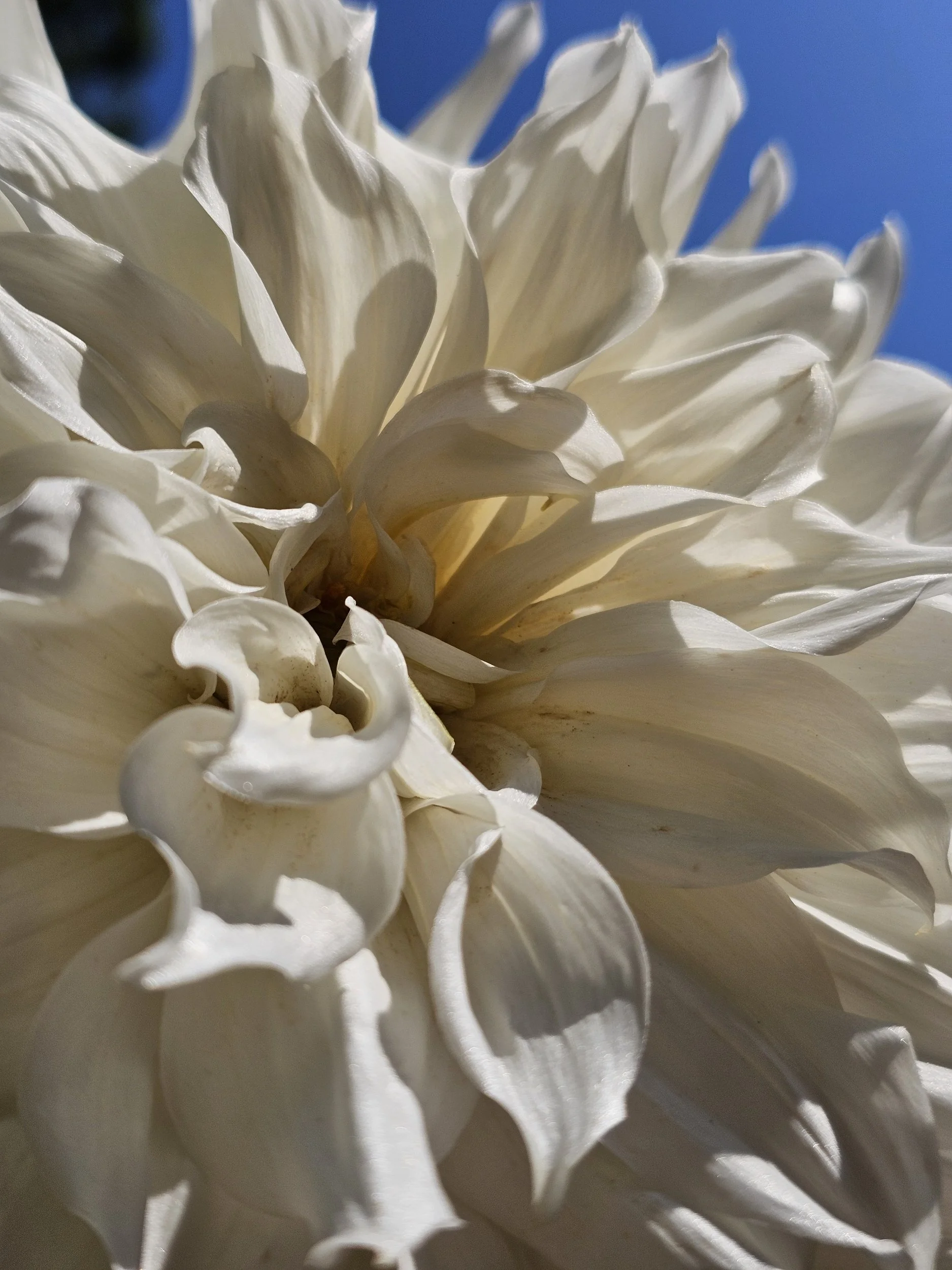
Beyond the photograph
My paintings often begin with photographs. But the photograph is not the destination. It is a doorway. I look at the image and ask myself what it is that made me stop. Perhaps it is the expression. Perhaps the light. Perhaps the way the head is positioned. Perhaps something much harder to define.
Once I know what has caught my attention, I can begin to make decisions about the painting. What should remain? What should disappear? How close should I come? Where should the image be cropped? How much of the surrounding world is actually necessary? Sometimes the answer is: very little.
The power of the crop
Cropping is one of the most important parts of a close-up painting. The edge of the canvas becomes an active part of the composition. A subject can be partially cut off. An ear can disappear beyond the frame. The top of a head can sit close to the edge. There may be very little background. These decisions can initially feel almost uncomfortable.
But that slight tension is often what makes the painting feel intimate. The viewer is not being given the entire story. They are being invited to come closer.
Painting what is hidden in the dark
One of the things I particularly enjoy about painting darker subjects is discovering how much colour exists within darkness. What appears to be black may contain blue, violet, brown, red or green. Grey fur can contain warm ochres and cool blues. Shadow is rarely simply the absence of light. It has its own colour. This becomes especially important when painting a close-up because there is nowhere for the colour to hide. The subtle changes become the subject.
A small shift from warm to cool can change the shape of a face. A slightly lighter area can bring a cheek forward. A deeper shadow can make an eye appear brighter. Painting close-up has taught me to look for these almost invisible changes.
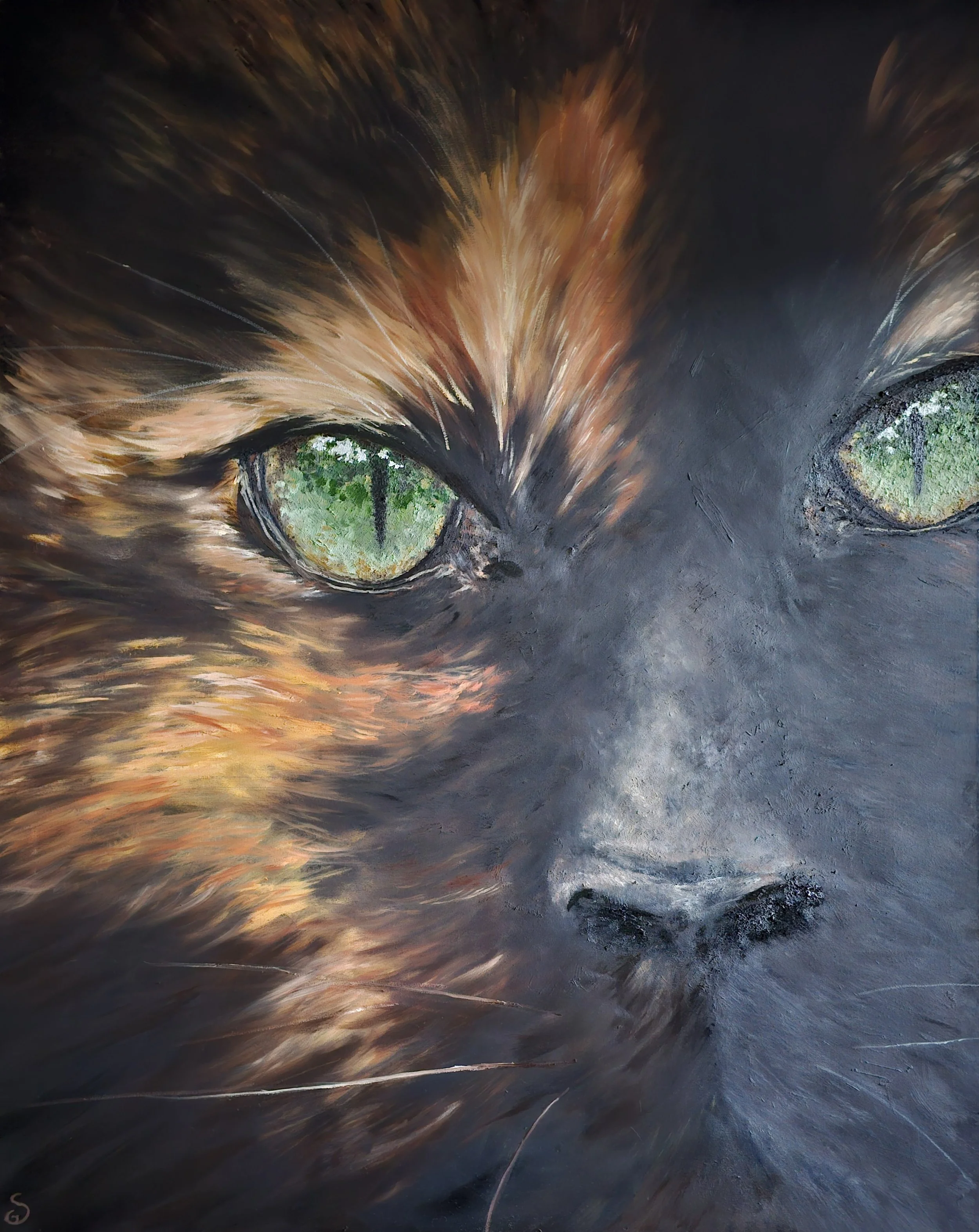
Yuki
Yuki is part of this exploration. When I began painting her, I was interested not simply in creating a likeness, but in capturing something of her character. The painting asks the viewer to stay with her. To look into her eyes. To notice the layers of colour in the fur. To see the softness within the darker areas. There is a quietness to her that I wanted the painting to hold.
The closer I looked, the more I found. And that is perhaps one of the great pleasures of painting someone, or something, you know well. Familiarity does not make you see less. If anything, it can make you look harder.
And now, Muta
Muta has taken me into a slightly different place. Where Yuki led me into darkness and subtle colour, Muta has made me think much more about silver, reflected light and the softness of grey. The fur appears simple at first. But again, the closer I look, the more complicated it becomes. Warm and cool greys. Tiny changes in value. Reflections. Edges that are sharp in one place and almost lost in another. The eyes holding everything together. This is what I love about painting animals. The more closely you look, the less simple they become.
When detail becomes too much
Painting close-up does not mean painting every detail. In fact, sometimes the opposite is true. There are moments when I need to soften an edge. Allow fur to disappear. Leave something unresolved. Not every hair needs to be described. Not every part of the painting needs equal attention. If everything is sharp, nothing is truly important. I want the eye to move. To rest. To discover. To lose itself in one area and then find its way back to the eyes. There needs to be space for the viewer to participate.
The intimacy of seeing
Perhaps this is what I mean when I talk about the intimacy of seeing. It is not simply about physical distance. It is about attention. We can look at something from very close by and still not really see it. And we can look at something from a distance and feel deeply connected to it. Painting simply gives me a reason to stay. To look again. And again. Until something begins to reveal itself.
Why this series matters to me
The Close-Up Figures series is becoming an exploration of presence. I am interested in what happens when we remove the distractions and allow one subject to occupy almost the entire field of vision. The paintings are quiet, but they are not intended to be passive. I want them to hold attention. To create a moment of stillness. To make the viewer feel that they have encountered someone rather than simply looked at an image. Perhaps that is why I keep returning to close-up subjects.
They ask something of us. They ask us to slow down. To notice. To stay.
And in a world where we are constantly encouraged to move on to the next image, the next message, the next thing, I find that increasingly valuable.
Looking a little longer
Painting has changed the way I look at the world. A face is no longer simply a face. A shadow is not simply dark. A grey cat is not simply grey. A flower is not simply a flower. Everything contains more than its first impression. Perhaps this is ultimately what I am trying to give the viewer through these paintings: a reason to look a little longer.
To come closer. To notice what is easily missed. To experience the quiet intimacy that can exist between the person looking and the subject being seen.
Because sometimes, when we look closely enough, **we don't just see more. We feel more.**