

Why I Believe Art Is Not Separate From Life
There was a time when I thought of art as something that happened in a particular place. In a studio. On a canvas. With brushes laid out beside a palette, and perhaps a few quiet hours in which to disappear from the rest of the world. I no longer see it that way.
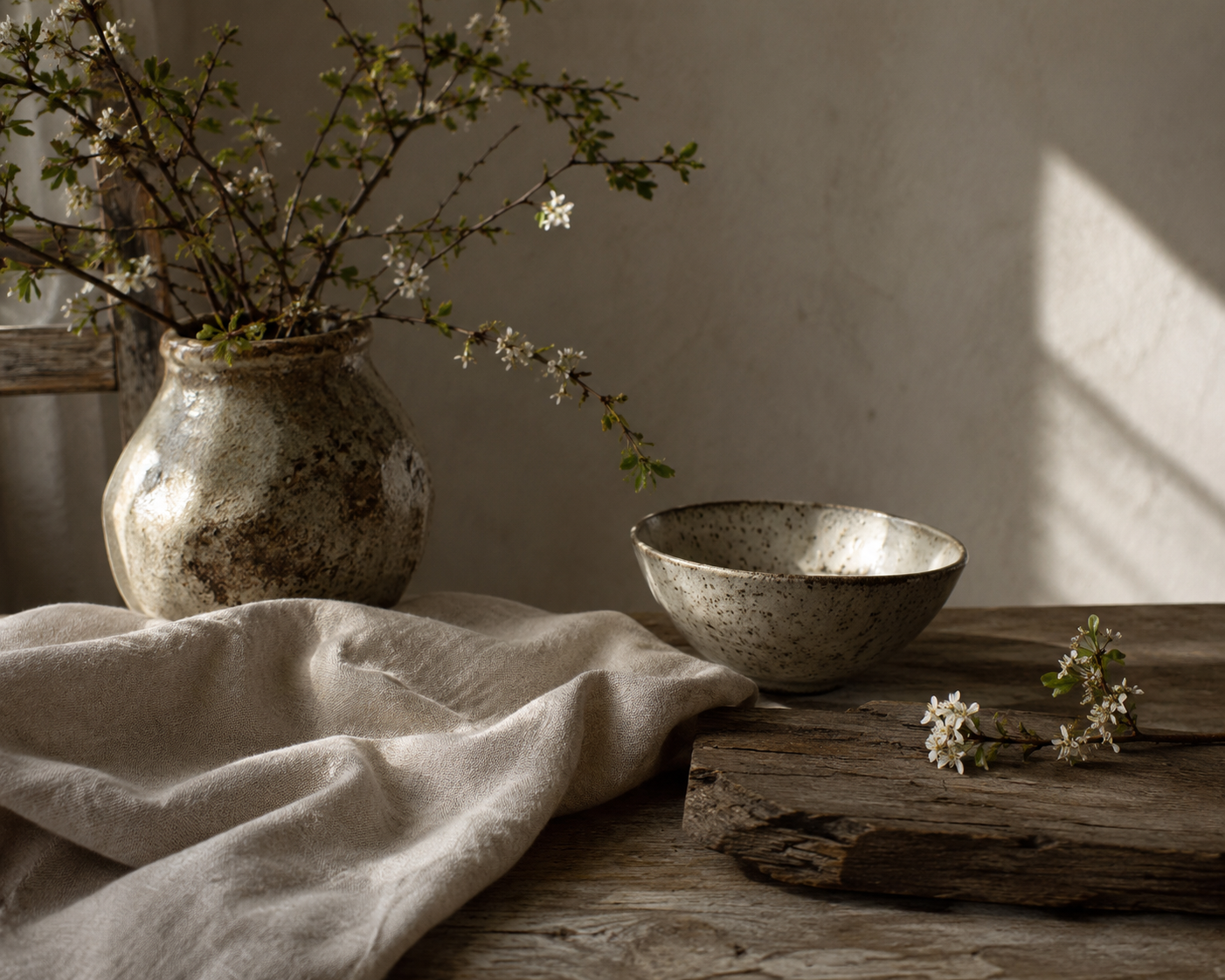
For me, art has become inseparable from the way I look at everything else, the light falling across a room, the shape of an old wooden table, the changing colours of a garden, the character in a cat's eyes, the texture of linen, the imperfect edge of a handmade bowl. Art is not simply something I make. It is a way of seeing.
Learning to look
Painting has taught me to slow down. When I paint, I cannot simply look at a subject and decide that it is brown, grey, white or black. I have to really look. A shadow is rarely just a shadow. There may be blue within it, violet, warm earth colours, reflected light. White fur may contain ochre, pink, grey and green. A seemingly simple surface can hold an extraordinary number of subtle changes. The longer I look, the more I see. And that way of looking has gradually found its way into the rest of my life.
I notice the particular quality of afternoon light in a room. I notice how an old piece of wood has changed with age. I notice the first flower appearing in the garden after winter. I notice how a room feels when there is less in it. Perhaps this is one of the greatest gifts art can give us: the ability to pay attention.
Beauty doesn't have to be loud
I have always been drawn to things that don't demand attention. Natural materials. Quiet rooms. Weathered surfaces. Handmade ceramics. Old wood. Linen. Stone. Flowers that are allowed to grow slightly imperfectly. I love spaces that have room to breathe. There is something deeply comforting about a home that doesn't feel as though it is trying to prove anything.
The same is true of painting. A painting does not necessarily have to shout in order to hold your attention. Sometimes it is the quietest things that stay with us longest: a look, a gesture, a particular colour, the subtle transition between light and shadow. I think beauty often works in this way. It doesn't always announce itself. Sometimes we have to become quiet enough to notice it.
The home as a creative space
I don't believe that art belongs only on gallery walls. A painting changes when it enters a home. It begins a conversation with the architecture, the light, the furniture and the people who live around it. A beautiful room is not simply a collection of beautiful things. It is a composition. There is colour, proportion, rhythm, texture, light and space. There are areas of emphasis and areas of rest. In that sense, decorating is not so very different from painting.
When I think about a room, I often think about it in much the same way that I think about a canvas. What needs to be seen? Where should the eye rest?Where is there too much? Where is there not enough? What happens when two contrasting textures meet? And perhaps most importantly: How does the space make you feel? A home should not simply look beautiful in a photograph. It should feel beautiful to live in.
The garden is another kind of canvas
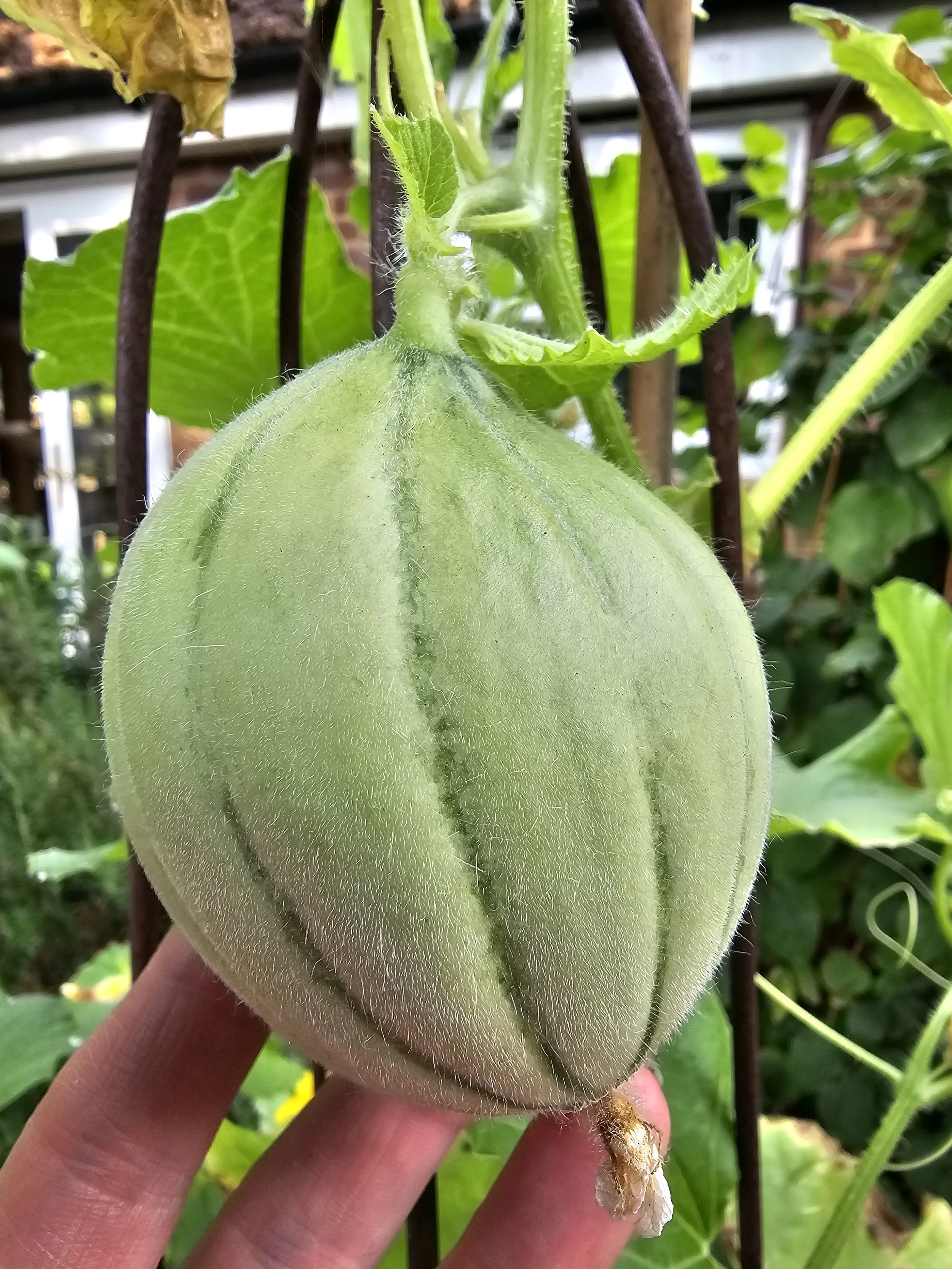
The garden has taught me something similar. Unlike a painting, a garden cannot be completely controlled. It changes with the seasons. Plants grow where you didn't expect them to. Flowers disappear. Leaves turn colour. A beautiful composition may last only for a few weeks. And yet that impermanence is part of its beauty.
Gardening asks us to observe rather than control. It teaches patience. It teaches us to appreciate change. It also reminds us that beauty does not have to be perfect. A slightly battered leaf can be beautiful. A faded flower can be beautiful. An old stone covered in moss can be beautiful. Perhaps we become better artists when we become better observers of the natural world.
Painting as a form of attention
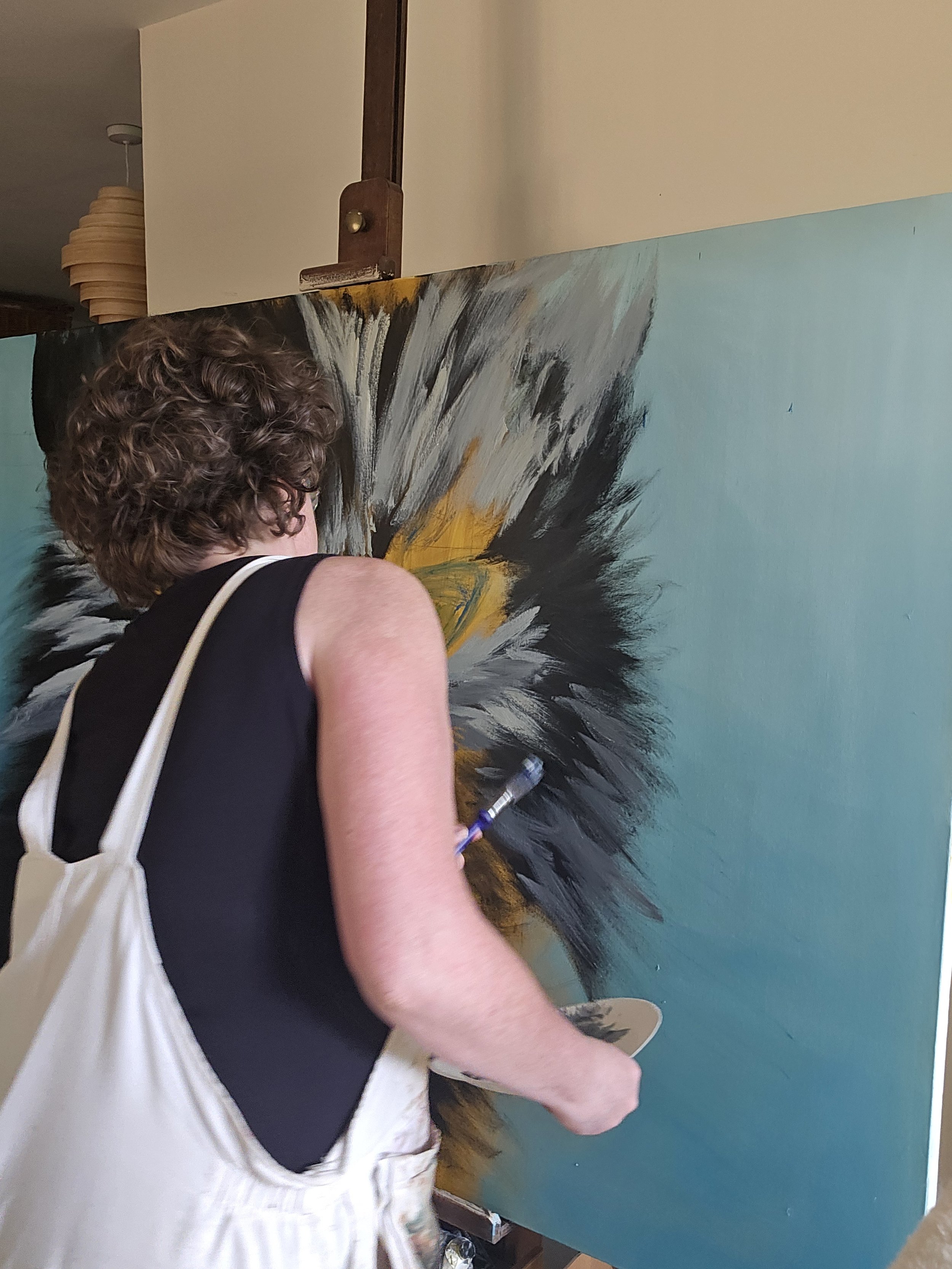
When I stand in front of a canvas, I am not simply trying to reproduce what I see. I am trying to understand it. That distinction matters. A photograph can record an image in an instant. Painting asks something different of us. It asks us to spend time with the subject. To look. To question. To make decisions. To notice what matters and what can be left unsaid.
This is particularly important in my close-up paintings. When a face fills the canvas, there is nowhere for the viewer, or the painter to hide. A small shift in the position of an eye can change the entire expression. A few millimetres can alter the character of a face. The closer I look, the more individual the subject becomes. And that is what I want my paintings to preserve: not simply appearance, but presence.
Art and the ordinary
I think we sometimes make art seem more mysterious than it needs to be. We imagine that creativity belongs to artists, writers, musicians and designers. But creativity can be found in ordinary decisions. The way someone arranges flowers in a vase. The way a table is laid. The way a garden path is planted. The colour chosen for a wall. The recipe adapted because something in the kitchen needs using.
The decision to repair an old chair rather than replace it. The way we photograph something because the light is beautiful. These may seem like small things. But they are all expressions of attention and choice. And perhaps that is creativity in its most everyday form.
A life made consciously
For me, this is where art and life truly meet. I don't want creativity to be something I do for an hour and then put away. I want it to influence the way I live. I want to notice more. To make things with my hands. To surround myself with objects that have meaning. To spend time in the garden. To make my home calm and considered. To paint. To write. To leave some space in my days for simply looking. This doesn't mean that life becomes perfect. Quite the opposite.
There will always be unfinished paintings, difficult days, weeds in the garden, rooms that don't quite work and plans that change. But perhaps art gives us another way of approaching those imperfections. Instead of asking, How can I make everything perfect? we can ask: What is worth noticing here?
Why SG-Art exists
This is really the idea behind SG-Art. It began with painting, but it has never felt to me as though painting exists in isolation. Art connects naturally to the spaces in which we live. The spaces connect to the gardens outside them. The garden connects us to nature and the passing seasons. And all of these things connect to the larger question of how we want to spend our lives.
Art. Home. Garden. Creative Freedom.
They are not four separate subjects. They are four ways of exploring the same thing: how to create a life that feels meaningful, beautiful and truly our own. That is what I want this Journal to explore. Not a perfect life. Not a fashionable life. Not a life filled with more and more things. But a life lived with greater attention. A life where beauty is noticed rather than consumed. A life where creativity has a place. A life where home is a refuge, the garden is a source of wonder, and art becomes part of everyday existence rather than something reserved for special occasions.
Because ultimately, I don't believe art is separate from life. I believe art teaches us how to see life. And perhaps, when we learn to see differently, we begin to live differently too.