

Avoidance, Then Abstraction
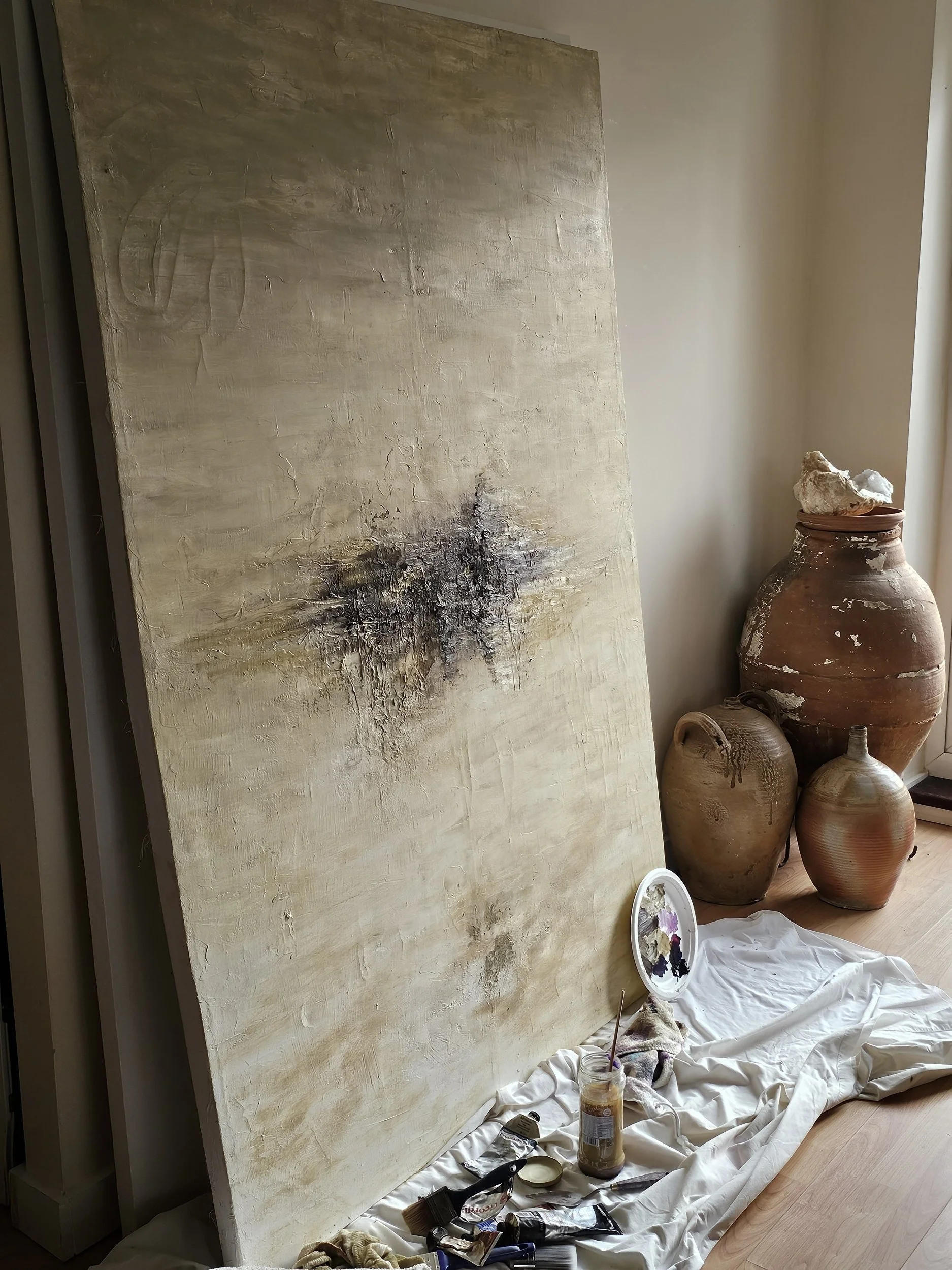
Today I realised just how difficult it is to begin an abstract painting when you have never truly done one before. I think, in part, I turned to it as a way of avoiding something else, I had been procrastinating on finishing another painting, one that suddenly felt heavy with expectation. Starting something abstract seemed like a way to relax, to let my mind float without pressure or obligation.
But it has not been as easy as I imagined. Without a clear subject or structure, the blank canvas felt even more intimidating. Every mark carried uncertainty. I found myself hesitating over colour, placement, and gesture, questioning each decision as soon as it was made. In representational work, there is something to guide you, here, there is only instinct, and mine felt unreliable at first.
There is also a quiet vulnerability in abstract painting. Without recognisable forms, the work feels more exposed, as though it reveals something internal rather than external. It is harder to hide behind technique. I became aware of my own hesitation, my tendency to overthink, and my reluctance to trust the process.
Progress has been slow and uneven. Occasionally, something clicks, a balance of colour, a texture that feels alive, a sense of movement emerging. But these moments are fleeting. I am learning to sit with uncertainty, to resist overworking, and to accept that not every stage needs to make sense.
What I thought would be an escape has become its own challenge. Yet there is something quietly freeing in it too. Even in the confusion, I can feel a shift, a softening of control, a willingness to explore. The painting remains unresolved, but perhaps that is enough for now: to keep going, without needing to know exactly where it will lead.